
01 / THE DEAD RECEPTACLE
OUTDOOR ELECTRICAL OUTLET NOT WORKING?
Here’s what could be wrong, and what to check before assuming the receptacle itself has failed.
A dead patio, porch, or garage-side outlet may be shut off by a GFCI somewhere else in the house. It could also be a tripped breaker, moisture getting past a cover, a failed device, or a loose connection. The symptom is the same. The repair isn’t.
Start with the safe checks02 / HOMEOWNER CHECKS
BEFORE YOU REPLACE ANYTHING.
First, establish whether this is a power-supply problem, a GFCI shutdown, or evidence of damage. These are observation and accessible-control checks, not instructions to open a box or handle conductors.
STOP CONDITIONS / WATER · HEAT · BURNING ODOR · SPARKS · SHOCKUnplug what’s connected.
If the setup is dry and undamaged, disconnect extension cords, seasonal lights, tools, timers, and other loads. A fault in attached equipment can trip protection even when the wall outlet is healthy.
Inspect from the outside.
Look for a broken cover, water or ice in the enclosure, scorched plastic, corrosion, or a loose receptacle. If you see any of these, leave it unused. Do not open the enclosure.
Look for a tripped GFCI, including indoors.
The protected outdoor outlet may not have its own TEST and RESET buttons. Check accessible GFCIs in the garage, basement, utility area, and other outlets on the same circuit. Reset once only if everything is dry, intact, and safe.
Check the circuit breaker.
At the panel, look for a breaker in the tripped or intermediate position. If the panel and circuit are dry and undamaged, move the affected handle fully OFF, then ON once. A breaker that trips again is a diagnostic clue, not an invitation to keep trying.
Recheck power only when safe.
At a dry, undamaged outlet, a known-working lamp or plug-in device can confirm whether power returned. If the outlet remains dead or protection trips again with the loads unplugged, stop and schedule diagnosis.
Do not remove covers, probe exposed wiring, bypass GFCI protection, or move the load to an unprotected receptacle just to keep it running.
03 / UNDER THE SYMPTOM
WHY AN OUTLET GOES DEADSIX FAILURES.
ONE SYMPTOM.
“No power” describes the result. The job is to identify the interruption in the electrical path. These are common possibilities, not a diagnosis based on appearance alone.
GFCI protection tripped.
The outdoor receptacle may be protected by an indoor GFCI or GFCI breaker. One trip can shut off several downstream outlets.
Breaker opened.
A shared branch circuit can trip after a fault or an excessive load. The panel and the GFCI are separate places to check.
Water entered the box.
Rain, melting snow, runoff, or irrigation can reach poor seals and connections. Repeated wet-weather shutdowns deserve a physical inspection.
Receptacle or GFCI failed.
Age, corrosion, or a failed protective device may prevent power from being restored. Some self-testing GFCIs lock out when protection is compromised.
A connection loosened.
A failed splice or termination upstream may leave one outlet or a group without power. Locating it requires de-energized testing by an electrician.
Attached equipment has a fault.
A wet extension cord, damaged holiday-light connection, timer, or plugged-in appliance can trip otherwise functioning GFCI protection.
A GFCI trip interrupts power when leakage current suggests a ground-fault hazard; a standard circuit breaker primarily responds to overcurrent. Neither should be repeatedly reset without addressing the cause.
04 / DIAGNOSTIC FIELD NOTES
WHAT THE PATTERN TELLS YOU.
The timing and extent of the outage are often more useful than the outlet’s appearance. Use these patterns to describe the problem accurately when requesting a repair.
Shared GFCI device or branch circuit feeding multiple locations
Check accessible GFCIs and affected breaker once, if dry and intact
Failed receptacle or connection, or the only load on a protected branch
Verify other outlets safely; ask for receptacle and feed testing
Possible moisture in a cord, fixture, cover, or receptacle enclosure
Stop use and document where moisture collects; request inspection
Active ground fault, absent supply, wiring fault, or failed GFCI
Do not force the button or repeat resets; have the fault located
Possible short circuit, ground fault, or other branch-circuit problem
Leave the circuit off and arrange electrical diagnosis
Potential overheating or damaged electrical connections
Stop use, avoid touching the equipment, and seek prompt service
A power-restoring reset does not explain why protection opened. If the same symptom returns, the pattern matters.
05 / RAIN · SNOW · SPRINKLERS
OUTSIDE IS A DIFFERENT ENVIRONMENT.
Outdoor wiring has to survive weather and still provide shock protection. An enclosure can appear covered while the actual plug connection remains exposed to water.
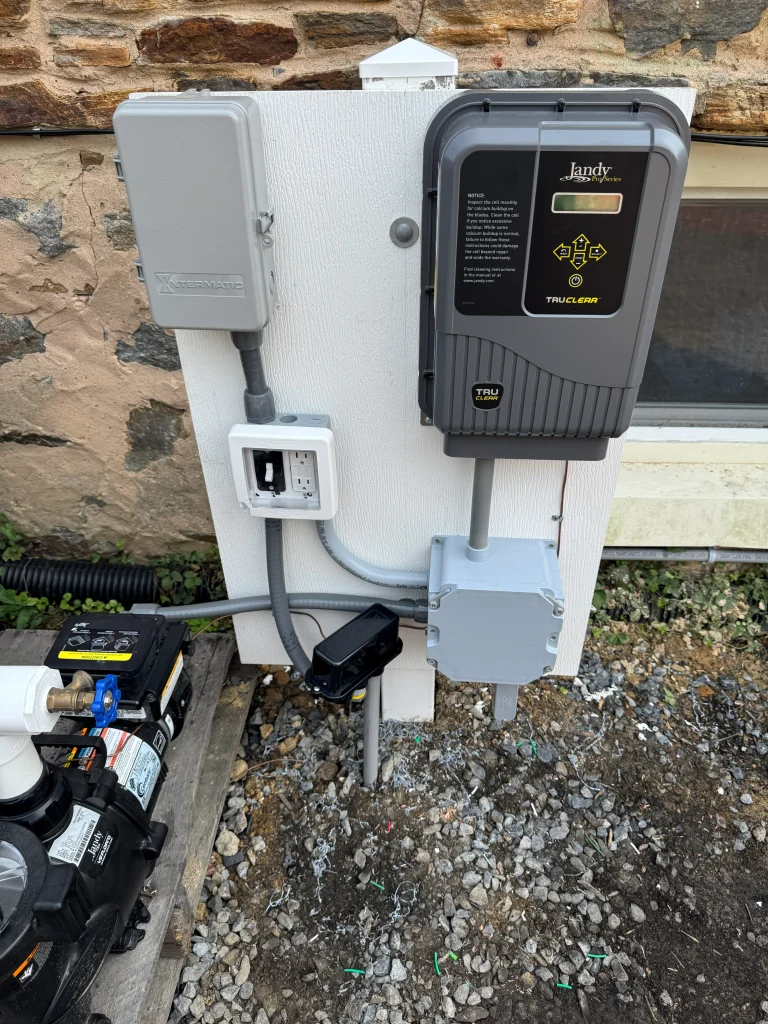
GFCI protection is the safety layer.
A GFCI detects a difference between current leaving and returning. A trip can mean moisture or damaged equipment has created a dangerous leakage path. The answer is to find the cause, not bypass protection.
Weather-resistant does not mean waterproof.
Exterior receptacles need equipment and covers suitable for the location. A listed weather-resistant receptacle, sound gasket and properly selected while-in-use cover help protect a plugged-in cord, too.
Ice and runoff change the picture.
Melting snow can enter the same vulnerable seams as rain. Seasonal lighting cords and timers add more connection points. Route cords away from pooled water and inspect any weather-exposed connections.
06 / WHEN THE RESET IS NOT THE REPAIR
FIND THE FAILURE.
THEN FIX THE RIGHT PART.
A service visit should establish where power stops and why protection operated. Replacing the visible receptacle without checking the supply path may leave the actual problem untouched.
Confirm the circuit path.
Identify the feeding breaker, any GFCI device protecting downstream outlets, and whether power reaches the exterior box.
Check the termination and enclosure.
With power isolated, evaluate receptacle condition, connections, box integrity, gaskets, corrosion, water paths, and connected equipment.
Repair to the actual condition.
That may mean a properly rated receptacle or GFCI, renewed weather protection, corrected wiring, or breaker/circuit work when testing supports it.
Calvary Electric serves communities including Frederick County, Towson, Lutherville, Ellicott City, Columbia, York County, and Adams County. See service coverage.
For new exterior circuits or work beyond a straightforward repair, the permit and inspection requirements depend on the jurisdiction and scope. Maryland regulates electrical licenses statewide; Pennsylvania’s Uniform Construction Code is generally administered through municipalities or authorized agencies. Calvary can help determine the correct approval path for the work.
07 / FIELD QUESTIONS
WHAT HOMEOWNERS ASK NEXT.
Short answers to the problems that appear after a patio outlet stops working.
01Why is my outdoor outlet not working, but the breaker is on?
A GFCI device elsewhere may be tripped and cutting power to this outlet. Another possibility is a failed receptacle or a loose connection. Check accessible upstream GFCIs first; if nothing restores safe power, have the circuit traced.
02Where is the reset button for my outside outlet?
It may be on the outlet itself, another GFCI receptacle on the same branch circuit, or at a GFCI breaker in the panel. Outdoor outlets do not always have their own buttons.
03Why won’t my outdoor GFCI reset?
It may not have incoming power, may be detecting an active fault, or the device may have failed its protective self-test. Some models intentionally lock out. Do not force or repeatedly reset it.
04Can rain stop an outside outlet from working?
Yes. Moisture in a receptacle, enclosure, plug or connected device can cause GFCI protection to operate. A recurring weather-related trip calls for inspection of the entire outdoor setup.
05Can I replace a dead outdoor outlet with a regular indoor receptacle?
No. The replacement must be appropriate for the outdoor location and installed with the required GFCI protection and weatherproof enclosure. A failed device also does not explain whether the wiring behind it is sound.
06What if my outlet sparks, smells hot, or has a cracked cover?
Stop using it. Do not touch damaged equipment or attempt repeated resets. Arrange prompt electrical service; emergency symptoms such as smoke or fire require emergency response.
08 / CALVARY ELECTRIC / RESIDENTIAL SERVICE
POWER IS OFF.
LET’S FIND OUT WHY.
If the GFCI won’t reset, the breaker trips again, or moisture has reached the enclosure, Calvary Electric can troubleshoot the circuit and determine the appropriate repair for your Maryland or Pennsylvania home.
SAFETY + CODE REFERENCES
Technical and permitting background used for this guide. Project conditions and locally adopted requirements determine the final repair approach.